Tzankujil Cliff Jump Lake Atitlán — Hike, Cliff Jump at the Nature Reserve, and Village Stops
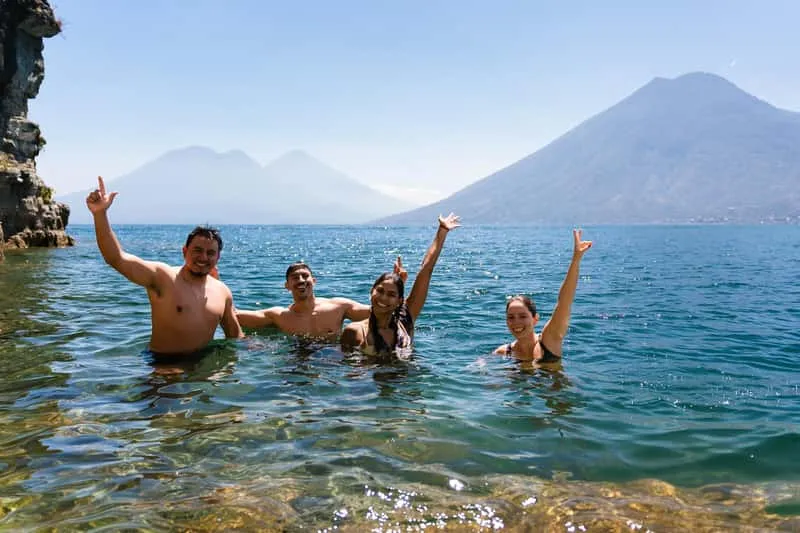
The 12-meter cliff platform at Tzankujil Nature Reserve is one of the lake's most exhilarating stops — a wooden diving platform built over the lake surface at San Marcos la Laguna, with the three volcanic peaks visible in every direction when you're airborne. This adventure boat tour combines a lancha crossing to San Marcos, a guided hike along an ancestral lakeside trail, the cliff jump, and stops at Mayan villages — all in seven hours. For a comparison of every boat tour on Lake Atitlán including lower-key options, the homepage covers all eight.
Tour At a Glance
The platform is purpose-built and maintained by the nature reserve. The jump is into deep lake water with no rocks in the landing zone. It's optional — you can swim instead.
The trail from San Marcos la Laguna to Tzankujil follows a pre-colonial route along the lake's western shore — shaded, scenic, and about 45 minutes on foot.
Departs Panajachel around 8:00 AM. The extra hour over standard village tours reflects the trail hike and swim time at the reserve.
Includes lancha, bilingual guide, reserve entry (skip-the-line), and village access. The price reflects the adventure activities and smaller group format.
A perfect rating — every reviewer to date has rated this tour 5 stars. 26 reviews is enough to be statistically meaningful, not just a handful of lucky early reviews.
Cancel up to 24 hours before departure for a full refund.
Check Availability for This Adventure Tour
This tour has the highest rating on the site and a small group format — it reaches capacity faster than standard village tours. Check dates below.
The Tzankujil Cliff Jump: What to Expect
Tzankujil Nature Reserve at San Marcos la Laguna is a private ecological reserve that maintains a cliff jumping platform over the lake's northwestern shore. The platform sits at approximately 12 meters above the water surface — for reference, a 12-meter jump takes about 1.5 seconds of freefall before hitting the water.
The landing zone is clear of rocks and the water is deep. The reserve checks conditions before allowing jumps and the guide will confirm whether jumping is available on your tour date. If conditions are unsuitable (rare), the reserve is still open for swimming from the shore platforms.
Jumping is entirely optional — many travelers on this tour swim from the lower platforms rather than jump from the top. The guide does not pressure anyone.
The Platform and the Reserve
The cliff jumping area is a dedicated section of the reserve with concrete and wooden platforms at multiple heights. Most travelers start on a lower 3–5 meter platform to gauge their comfort level before attempting the 12-meter jump.
- Multiple platform heights — approximately 3m, 6m, and 12m options
- Deep, clear lake water in the jump zone
- The reserve provides life jackets on request
- An attendant is present at the main platform
- Swimming is available regardless of whether you jump — the shoreline is excellent
The Ancestral Trail Hike from San Marcos
Before reaching Tzankujil, the group hikes from San Marcos la Laguna along an old indigenous trail that follows the lake's western shore. The trail is shaded by forest, takes about 45 minutes to walk, and offers views of the caldera with San Pedro Volcano framing the southern end.
The trail is categorized as moderate — some uneven terrain and roots, but no technical climbing. Most reasonably fit travelers complete it without difficulty.
- Distance: approximately 2–3 km one way from San Marcos to Tzankujil
- Duration: 40–50 minutes at a moderate pace
- Trail surface: dirt and rock, partially shaded
- Terrain: mostly flat along the lake edge with some gentle climbs
- Views: Volcán San Pedro and the western lake from multiple open points
Village Stops and How the Full Day Flows
San Marcos la Laguna — Trail Start
The tour starts at San Marcos la Laguna, one of the quietest villages on the western shore. Known for its spiritual retreat centers and meditation facilities, San Marcos has a distinctly different character from the busier Panajachel — smaller, more forest-like, with a reputation among long-term travelers as a contemplative stop.
The group docks here, spends a short time in the village, then begins the trail walk toward Tzankujil.
Additional Village Stops by Lancha
After Tzankujil, the tour continues by lancha to additional Mayan village stops — typically including one or two communities for a guided walk, market visit, or artisan cooperative stop. The exact villages vary; your booking confirmation will include the current itinerary.
Practical Info: Who Can Jump and What to Bring
What's Included
- Lancha crossings from Panajachel
- Bilingual English/Spanish guide
- Skip-the-line entry to Tzankujil Nature Reserve
- Trail hike with guide
- Mayan village stops by boat
- All dock and access fees
Not Included
- Lunch — bring snacks or plan for a village restaurant stop
- Drinks at the reserve
- Purchases at village markets or workshops
What to Bring
- Swimwear under your clothes — you'll want to swim regardless of whether you jump
- Water shoes or sandals you can hike in — the trail and shoreline are rocky in places
- Dry bag or waterproof phone case — there's no secure storage at the cliff jump platform
- Sunscreen (reef-safe) and a hat for the open boat sections
- Energy snack — it's a physically active 7-hour day
- Extra change of clothes in a dry bag — you will be very wet after Tzankujil
Not Suitable For
- Non-swimmers — Tzankujil is a lakeside reserve and most activities involve water
- Those with a fear of heights who might feel pressured — the jump is optional but the general context is active/adventure
- Travelers with knee or back injuries — the trail involves uneven terrain and the jump impact is significant
- Children under 10 — the 12-meter platform requires adult judgment; lower platforms may be appropriate for older children
- Anyone looking for a relaxed cultural tour without physical activity
Frequently Asked Questions
Is the cliff jump mandatory?
No — it's completely optional. The reserve has lower entry-level platforms and a good swimming area from shore. Plenty of travelers on this tour swim from the rocks without jumping from the tall platform. Your guide will not pressure you.
What's the water like at Tzankujil — cold, murky, deep?
Lake Atitlán is cold — surface temperature typically ranges from 18°C to 22°C (64–72°F) depending on season. It can feel like a shock for the first few seconds. The water is clear and deep directly under the platform. The lake does not have strong currents.
Is there a similar tour that focuses on swimming at Tzankujil without the cliff jump?
Yes — the water taxi tour to Tzankujil and San Juan la Laguna prioritizes swimming at the reserve over adventure jumping, caps the group at 10 travelers, and adds a women's weaving cooperative stop in San Juan. At $100, it's a more premium small-group option for those who want Tzankujil without the adventure framing.
How much does Tzankujil Nature Reserve cost to enter independently?
The reserve charges approximately 50–100 quetzales ($6–13 USD) for entry without a tour. This tour includes skip-the-line entry — useful in peak dry season when the reserve can have a queue.
Is the hike from San Marcos to Tzankujil difficult?
No — it's a moderate trail along the lake edge, mostly flat with some root and rock terrain underfoot. Most people complete it in 40–50 minutes at a walking pace. Wear shoes you're comfortable hiking in rather than sandals with straps.
What Travelers Say
The 12-meter jump was terrifying and absolutely worth it. Standing on the platform with the three volcanoes behind me — that view is what stays in my memory. The guide was calm and encouraging without being pushy. Perfect rating is deserved.
I didn't jump from the top — I swam from the lower platform instead. Zero pressure from the guide. The hike from San Marcos was beautiful and the village stops afterward were a great way to end the day.
The lake at Tzankujil is stunning. Cold, yes, but crystal clear and deep. The whole tour is adventure done right — active but not reckless, and the guide made sure everyone felt comfortable with what they chose to do.