Panajachel to San Juan la Laguna by Lancha — Shared Boat Tour Guide
The most affordable way to cross Lake Atitlán is by shared lancha — and this route connects two of the lake's most visited Mayan villages in a single six-hour circuit. Departing from Panajachel's main embarcadero, this guided tour takes you to San Juan la Laguna for a textile cooperative visit, then continues to Santiago Atitlán's colonial market before bringing you back across the caldera. For a full look at every boat tour on Lake Atitlán departing from Panajachel, the homepage compares all eight options.
Tour At a Glance
Departs from Embarcadero de Panajachel — the main public dock in town. No private boat, no premium — this is how locals cross the lake.
Typically departs 8:00–9:00 AM and returns to Panajachel by early afternoon, avoiding the afternoon Xocomil wind.
Includes lancha crossings, bilingual guide, entry to the textile cooperative, and village access. Lunch is not included.
One of the most-reviewed Lake Atitlán boat tours available — high confidence across a large sample.
Your guide explains the history of each village, translates at the cooperative, and handles all dock logistics.
Cancel up to 24 hours before departure for a full refund — book ahead and adjust if your plans change.
Check Dates and Book Your Lancha
This tour runs daily in the morning. Spots fill quickly during dry season (November through April) — check availability below and reserve your place in advance.
What the Shared Lancha Tour Actually Covers
This is a structured guided circuit, not a water taxi drop-off. You depart Panajachel with a bilingual guide who stays with the group for the entire day, providing context at every stop rather than leaving you to explore independently.
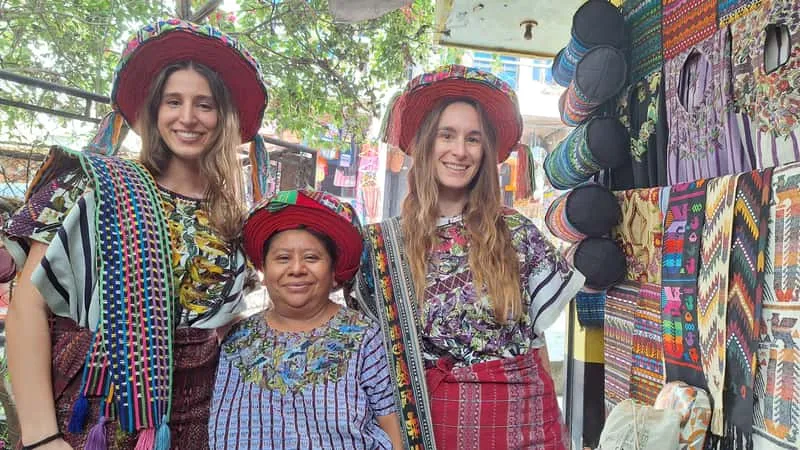
The first stop is San Juan la Laguna — a village known across Guatemala for its natural textile dyeing traditions. The cooperative visit here is a genuine workshop, not a souvenir shop. You watch artisans demonstrate the extraction of pigments from plants and insects, then see the weaving process on traditional backstrap looms. The village is quieter and more artisan-focused than the larger Santiago Atitlán.
The second stop is Santiago Atitlán, the lake's largest Mayan town and one of the most culturally significant in Guatemala. The colonial market operates daily, and the colonial church — built on the site of a pre-Columbian ceremonial site — is one of the most-visited in the Guatemalan highlands. Your guide handles context for both.
The Two Villages: What to Expect at Each Stop
San Juan la Laguna comes first and takes about 90 minutes. The highlight is the women's textile cooperative, where Tz'utujil Maya weavers work with natural pigments derived from indigo, cochineal, and various plants. The village's main street also has small galleries and coffee shops if you want to explore independently while the group visits the cooperative.
- Textile cooperative: natural dye demonstrations + backstrap loom weaving
- Small galleries selling directly from the artisans
- Quieter than Santiago — fewer vendors, more village atmosphere
- Coffee grown on the hillside above the village (local cafes on the main street)
Santiago Atitlán: Colonial Market and Living Culture
Santiago Atitlán is the more urban of the two stops — a working Mayan town of roughly 50,000 people with a daily market, a colonial Catholic church, and the Maximón shrine. The church, built in the 1540s, has a hand-embroidered altarpiece woven by local artisans over several decades.
The Maximón (pronounced 'mah-shee-MOHN') shrine is one of the lake's most unusual cultural sites — a Mayan folk saint worshipped with rum, tobacco, and flower offerings. Your guide will explain the tradition and whether access is available on your visit date.
- Colonial church with embroidered altarpiece — free to enter, donation expected
- Maximón shrine — culturally significant, access varies by day
- Daily outdoor market selling produce, textiles, and crafts
- Tz'utujil Maya dress still worn by local women — distinctive purple-striped huipils
Practical Information: Dock, Timing, and the Xocomil
Where to Find the Embarcadero in Panajachel
The departure dock is Embarcadero de Panajachel on Calle Rancho Grande — a five-minute walk from Calle Santander, the main tourist street. Follow the signs for 'Embarcadero' or ask locally for 'el muelle'. The tour operator will confirm the exact meeting point when you book.
- Address: Calle Rancho Grande, Panajachel, Sololá
- 5-minute walk from Calle Santander (main tourist drag)
- Dock opens early — arrive 15 minutes before your scheduled departure
- Wear layers to the dock: mornings on the lake are cool even in dry season
Morning Departures and the Xocomil Wind
All responsible tour operators on Lake Atitlán depart in the morning. The Xocomil is a strong afternoon wind that typically arrives between 12:00 PM and 1:00 PM, turning the lake's surface choppy and making small boat crossings uncomfortable or rough. By leaving at 8:00–9:00 AM, this tour completes the main crossings before conditions deteriorate.
The return to Panajachel is typically timed for noon to early afternoon, catching the lake at its calmest. If you're prone to motion sickness, sit toward the center of the lancha and face forward.
If you would rather cross on your own, public lanchas run the same route all day and our lancha and water taxi guide covers the fares and the docks. For what the Xocomil actually is and how the seasons change the crossing, see our best time to visit guide.
What's Included, What to Bring, and Who This Is For
What's Included
- Shared lancha crossings in both directions
- Bilingual English/Spanish guide for the full day
- Entry to the women's textile cooperative in San Juan la Laguna
- Guided village walk in Santiago Atitlán
- Dock fees and port taxes
Not Included
- Lunch — budget $5–10 USD at local restaurants in Santiago Atitlán
- Purchases at the cooperative or market
- Entry to the Maximón shrine (small voluntary donation if visiting)
- Transport to/from Panajachel dock (taxi or tuk-tuk from your hotel)
What to Bring
- Sunscreen and a hat — the lake surface reflects UV strongly even on overcast mornings
- Light jacket or fleece — lancha crossings are breezy and mornings are cool at 1,562 m elevation
- Cash in Guatemalan quetzales for lunch, tips, and market purchases
- A small daypack — leave valuables at your hotel
- Motion sickness tablets if you're sensitive to choppy water
Not Suitable For
- Travelers who want a fast-paced packed itinerary — this is a relaxed cultural circuit, not an adventure tour
- Those with severe motion sickness who can't manage small open boats on lake water
- Anyone looking for a private boat experience — this is a shared lancha with other travelers
- Visitors who need extensive mobility assistance — village walking involves uneven cobblestone streets
Frequently Asked Questions
How long is the lancha crossing from Panajachel to San Juan la Laguna?
The crossing takes approximately 25–30 minutes each way. San Juan la Laguna is on the western shore — a shorter crossing than Santiago Atitlán, which sits at the southern end of the lake and takes about 35–45 minutes from Panajachel.
Is this tour suitable for children?
Yes — most families report no issues with children aged 6 and up on this tour. The lancha crossing is generally calm in the morning, the village walks are manageable, and the cooperative visit is genuinely interesting for older children. Bring snacks and sun protection for younger kids.
What's the difference between this and the full-day sailing tour?
The shared lancha tour uses a motor lancha and covers two villages in 6.5 hours at $40. The sailing tour on Lake Atitlán uses a sailing boat, covers three villages in 8 hours for $58, and includes small tastings (honey, cacao). The sailing tour is slower and more scenic; this one is more efficient and lower cost.
Can I buy textiles at the cooperative?
Yes. The cooperative in San Juan la Laguna sells directly to visitors — prices are fixed and the money goes to the artisans. You're not obligated to buy, but the quality is genuine and prices are much lower than in Antigua or Guatemala City.
Is there a guide who speaks English?
Yes — this tour includes a bilingual English/Spanish guide. The cooperative visits and village walks are explained in both languages.
How is this different from a cultural boat tour focused on the Mayan villages?
Both cover similar ground, but the small-group cultural boat tour is capped at 15 people and puts more emphasis on artisan workshops and extended village time. This shared lancha tour is usually slightly larger and at a lower price point — it's a better fit if you want an overview rather than an immersive cultural day.
What Travelers Say
The guide was excellent — she explained the history of the cooperative and translated our questions for the weavers. Santiago Atitlán's market was overwhelming in the best way. Completely worth $40.
I was nervous about the boat crossing but it was completely calm at 8 AM. The two village stops were well-paced and our guide knew everyone in the cooperative personally — made the visit feel real, not touristy.
Best $40 I spent in Guatemala. The textile cooperative in San Juan was genuinely fascinating — watching the natural dye process was something I'd never seen before.